
Cold storage is no longer optional. It is essential. From dairy plants and seafood exports to pharmaceuticals and frozen foods, temperature control protects product quality, regulatory compliance, and business profitability. At the center of every high-performance facility are Sandwich Panels For Cold Storage — the structural and thermal backbone of modern cold rooms. At Vivan Industries, we work closely with food processors, logistics companies, and industrial developers who need reliable, energy-efficient insulation systems. This guide delivers in-depth, up-to-date insight into Sandwich Panels For Cold Storage, including specifications, trends, cost analysis, and expert selection advice for 2026.
What Are Sandwich Panels For Cold Storage?
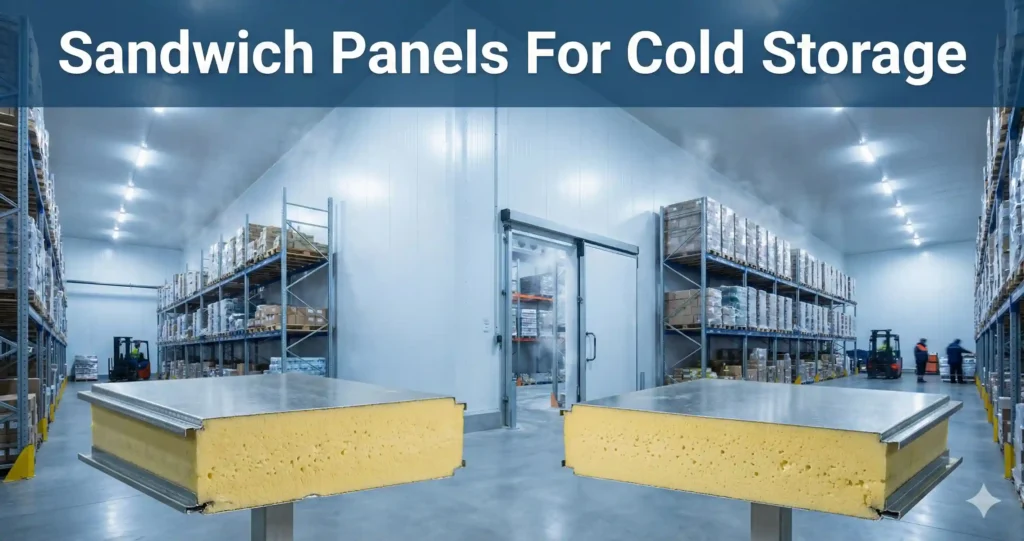
Sandwich Panels For Cold Storage are prefabricated insulated building panels designed to maintain precise temperature control inside cold rooms, chillers, and freezer warehouses. They consist of three layers:
- Outer metal sheet (PPGI, GI, or stainless steel)
- Insulated core (PUF or PIR foam)
- Inner protective metal sheet
This layered design reduces thermal transfer and creates an airtight enclosure that minimizes energy loss.
These panels are also commonly referred to as:
- Cold Room Puf Panels
- Cold Storage Sandwich panels
- Puf Panels For Cold Storage
The global cold chain market surpassed $300 billion in 2025, driven by pharmaceutical logistics, frozen food demand, and government food security programs. As cold storage infrastructure expands, demand for high-quality Sandwich Panels For Cold Storage continues to grow. At Vivan Industries, we manufacture advanced insulated panel systems engineered for durability, thermal resistance, and compliance with modern energy standards.
Why Insulation Performance Determines Cold Storage Success
Cold storage facilities operate 24/7. Even small insulation failures can result in:
- Increased compressor load
- Higher electricity bills
- Temperature fluctuations
- Condensation and mold formation
- Product spoilage
Energy accounts for nearly 60–70% of operational costs in refrigerated warehouses. Poor insulation is like running an air conditioner with the windows open. High-quality Sandwich Panels For Cold Storage provide:
- Low thermal conductivity
- Airtight cam-lock joint systems
- Vapor barrier protection
- Structural rigidity
Facilities using premium Cold Room Puf Panels report energy savings between 25% and 35% compared to outdated insulation systems. Choosing the right panel is not just about cost. It’s about long-term performance and reliability.
Core Materials Explained: PUF, PIR & EPS
The insulation core defines the panel’s thermal and fire performance.
PUF (Polyurethane Foam)
- Density: 40 ± 2 kg/m³
- Thermal conductivity: ~0.022 W/mK
- Excellent insulation performance
- Cost-effective solution
PIR (Polyisocyanurate Foam)
- Higher fire resistance
- Better thermal stability at elevated temperatures
- Slightly higher cost
Many developers researching advanced insulation also explore topics like What is PIR Insulation? Advantages and Disadvantages before selecting a material.
EPS (Expanded Polystyrene)
- Lower insulation efficiency
- Budget option
- Limited use in deep freezer environments
When evaluating material selection, businesses often compare performance data similar to discussions around Difference Between PUF and PIR Panels to determine compliance and safety requirements. For heavy-duty environments such as manufacturing plants and warehouses, insights from Puf Insulation For Industrial Use help guide appropriate insulation thickness and density selection.
Technical Specifications & Thermal Performance Metrics
Understanding specifications ensures you select the correct Sandwich Panels For Cold Storage.
| Parameter | Standard Range |
| Thickness | 40mm – 200mm |
| Density | 40 ± 2 kg/m³ |
| Width | 1000mm |
| Thermal Conductivity | ~0.022 W/mK |
| Metal Sheet Thickness | 0.4mm – 0.8mm |
Recommended Thickness by Application
| Application Type | Suggested Thickness |
| Air-Conditioned Rooms | 40–60mm |
| Chillers (0 to 5°C) | 80–100mm |
| Freezers (-20°C) | 120–150mm |
| Blast Freezers | 150–200mm |
Thicker panels provide better insulation and lower U-values, making them ideal for deep freezing environments. At Vivan Industries, panels are engineered to maintain structural strength while delivering optimal insulation efficiency.
Types of Sandwich Panels For Cold Storage
There are different panel configurations depending on structural and environmental needs:
Wall Panels
Used for vertical enclosure. Designed with cam-lock systems for airtight joints.
Roof Panels
Provide thermal protection and load-bearing strength.
Floor Insulation Panels
Support heavy racking and forklift movement while preventing ground heat infiltration.
Fire-Rated Panels
Often made with PIR core for enhanced fire safety compliance.
Each type of Sandwich Panels For Cold Storage plays a vital role in maintaining temperature stability.
Key Benefits for Industrial and Commercial Projects
Why do developers choose modern Sandwich Panels For Cold Storage?
Superior Thermal Insulation
Maintains consistent temperature and reduces compressor cycling.
Energy Savings
Reduces electricity consumption by up to 30%.
Quick Installation
Prefabricated design minimizes construction time.
Hygienic & Food-Safe
Smooth metal surfaces resist bacterial growth.
Lightweight but Strong
High strength-to-weight ratio reduces structural load.
Modular Flexibility
Panels can be dismantled and reused if required.
Modern Cold Storage Sandwich systems provide long-term value through efficiency and durability.
Industry Applications & Use Cases
Sandwich Panels For Cold Storage are used across industries such as:
- Food processing plants
- Meat and poultry facilities
- Seafood export hubs
- Ice cream manufacturing
- Pharmaceutical warehouses
- Agriculture and horticulture storage
- Dairy processing units
India’s cold storage capacity crossed 40 million metric tons in 2026, yet demand continues to rise. Infrastructure expansion is driving the adoption of high-quality Puf Panels For Cold Storage nationwide.
Installation Best Practices
Even the best panels fail if poorly installed.
Step-by-Step Process:
- Floor insulation and vapor barrier setup
- Wall panel alignment and cam-lock engagement
- Roof panel installation
- Joint sealing with food-grade silicone
- Door and corner flashing installation
Proper sealing ensures Sandwich Panels For Cold Storage perform at maximum efficiency. At Vivan Industries, trained technicians supervise installation to ensure airtight assembly.
Energy Efficiency & Sustainability Impact
Cold storage facilities are energy-intensive. Sustainable design matters more than ever.
High-performance Sandwich Panels For Cold Storage:
- Reduce carbon emissions
- Lower refrigeration system load
- Improve energy ratings
- Support green building compliance
Many facilities upgrading from conventional brick construction to insulated Cold Room Puf Panels report dramatic efficiency improvements. With stricter environmental norms in 2026, sustainable insulation solutions are no longer optional they are essential.
Cost Breakdown
Cost varies based on thickness and core material.
| Thickness | Approx. Price (Per Sq. Ft.) |
| 60mm | Moderate |
| 100mm | Medium-High |
| 150mm | High |
Though initial investment may seem higher, operational savings offset costs quickly. A 10,000 sq. ft. cold storage facility using premium Sandwich Panels For Cold Storage can achieve ROI within 2–3 years due to reduced energy consumption. Lower maintenance and improved equipment lifespan add additional savings.
Latest 2026 Trends in Cold Storage Construction
Cold storage technology is evolving rapidly:
- Fire-rated PIR panels
- Eco-friendly blowing agents
- Smart IoT temperature monitoring
- Modular portable cold rooms
- Solar-powered refrigeration systems
Manufacturers like Vivan Industries update production standards every 6–12 months to align with global energy codes and fire safety norms.
How to Choose the Right Manufacturer
Before selecting a supplier, ask:
- Is panel density certified?
- Are ISO standards followed?
- Is fire rating available?
- Do they provide after-sales support?
- Can thickness and finish be customized?
Choosing Vivan Industries ensures high-quality Sandwich Panels For Cold Storage, technical consultation, and reliable project execution.
PUF vs PIR Comparison Table
| Feature | PUF Panels | PIR Panels |
| Thermal Insulation | Excellent | Excellent |
| Fire Resistance | Moderate | High |
| Cost | Economical | Premium |
| Ideal For | Food & Dairy | Pharma & Export |
| Durability | High | Very High |
Both materials perform well in Sandwich Panels For Cold Storage, but selection depends on regulatory and safety requirements.
Maintenance, Durability & Lifecycle
High-quality Sandwich Panels For Cold Storage typically last 20–25 years with proper maintenance.
Maintenance Tips:
- Inspect joints every 6–12 months
- Check door seals regularly
- Monitor condensation
- Clean metal surfaces
Well-maintained Cold Storage Sandwich systems reduce long-term repair costs and protect product quality.
Conclusion
Efficient cold storage starts with proper insulation. Investing in high-quality Sandwich Panels For Cold Storage ensures stable temperature control, lower energy bills, and long-term durability. Whether you require advanced Cold Room Puf Panels, modular Cold Storage Sandwich systems, or customized Puf Panels For Cold Storage, partnering with a trusted manufacturer makes all the difference. Vivan Industries delivers energy-efficient, durable, and precision-engineered insulation solutions tailored to modern cold chain demands. Build smarter. Save energy. Protect your products. Connect with Vivan Industries today.
FAQs
1. What thickness is best for freezer rooms?
Typically 120mm–200mm depending on temperature range.
2. How long do Sandwich Panels For Cold Storage last?
With proper care, 20–25 years.
3. Are PUF panels waterproof?
Yes, they resist moisture and condensation.
4. Do sandwich panels reduce electricity costs?
Yes, energy savings can reach up to 30%.
5. Can panels be customized?
Yes, thickness, sheet type, and finish can be tailored to project needs.