
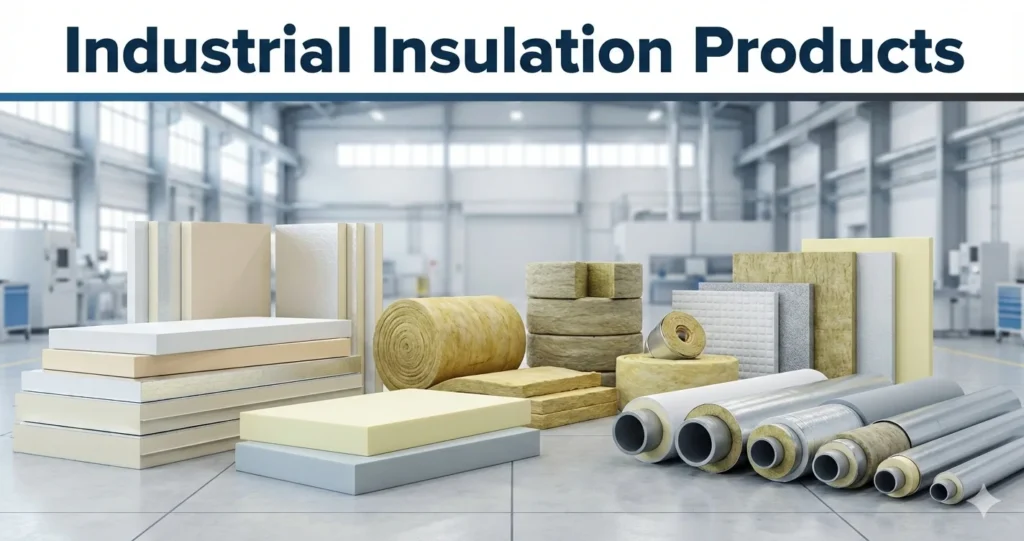
In today’s industrial landscape, energy efficiency is no longer a “nice-to-have.” It is a business necessity. Rising fuel costs, stricter safety regulations, and sustainability goals are forcing industries to rethink how heat, cold, and sound are managed inside their facilities. This is where industrial insulation products become mission-critical.
At Vivan Industries, we believe insulation is not just about wrapping pipes or covering equipment. It is about protecting assets, saving energy, improving worker safety, and ensuring long-term operational reliability. This updated 2026 pillar guide delivers deep, practical insights into industrial insulation—written clearly, naturally, and aligned with the latest Google Content Guidelines.
Introduction to Industrial Insulation
Industrial facilities lose a surprising amount of energy every single day. Heat escapes through uninsulated pipes. Cold air leaks from poorly protected systems. Noise travels freely across production floors. The solution to all these problems starts with industrial insulation products. According to the International Energy Agency (2025), industries that invest in modern insulation systems can reduce total energy consumption by up to 30%. That’s not a small improvement—it’s a competitive advantage.
At Vivan Industries, we work closely with manufacturers, plant managers, and engineers to deliver insulation solutions that improve performance without disrupting operations. From power plants to food processing units, insulation plays a silent but powerful role in keeping industries productive and compliant.
What Are Industrial Insulation Products?
Industrial insulation products are specialized materials designed to control heat transfer, reduce noise, prevent condensation, and protect equipment in harsh industrial environments. Unlike residential insulation, these products must handle extreme temperatures, moisture, vibration, chemicals, and mechanical stress.
They are commonly used on:
- Pipelines and ducting
- Boilers, furnaces, and heaters
- Storage tanks and reactors
- HVAC and refrigeration systems
Industrial-grade solutions are typically sourced from a reliable industrial insulation manufacturer in India or a trusted industrial insulation Supplier in India to ensure durability, consistency, and regulatory compliance.
Why Industrial Insulation Is Essential in 2026
The industrial world has changed. Energy prices are volatile. Environmental regulations are tighter. Downtime is more expensive than ever.
Industrial insulation products directly support:
- Lower energy bills
- Reduced carbon emissions
- Safer work environments
- Longer equipment life
A 2025 global insulation study revealed that poorly insulated industrial systems lose 20–40% of generated heat. In contrast, properly insulated plants recover their insulation investment within 12–24 months.
Major Types of Industrial Insulation Materials
Different processes require different insulation solutions. Choosing the right industrial insulation materials depends on temperature range, exposure, and application.
Common Industrial Insulation Materials
| Material | Temperature Range | Typical Applications |
| Mineral Wool | Up to 650°C | Boilers, furnaces |
| Glass Wool | Up to 250°C | HVAC, ducts |
| Calcium Silicate | Up to 1000°C | High-temp pipelines |
| Elastomeric Foam | -50°C to 105°C | Chillers, refrigeration |
| Polyurethane Foam | -40°C to 120°C | Cold storage panels |
Advanced solutions such as High Density Insulation Foam are now preferred for compact installations where performance and space efficiency matter.
Industrial Applications and Use Cases
Industrial insulation products are used across nearly every major industry:
- Oil & Gas: Pipelines, offshore platforms
- Power Generation: Boilers, turbines, steam lines
- Pharmaceuticals: Clean rooms, reactors
- Food & Beverage: Cold storage, processing plants
- Chemical Plants: Reactors and vessels
In temperature-sensitive operations, Puf Insulation For Industrial Use is increasingly adopted for its excellent thermal resistance and moisture control.
Thermal, Acoustic, and Fire Protection Benefits
Industrial insulation does far more than retain heat.
Key Benefits at a Glance
- Thermal control: Reduces heat loss and gain
- Noise reduction: Improves working conditions
- Fire safety: Slows flame spread
- Condensation control: Prevents corrosion
| Benefit | Practical Impact |
| Thermal efficiency | Up to 30% energy savings |
| Noise control | 15–25 dB reduction |
| Fire resistance | Improved safety compliance |
These advantages make industrial insulation materials essential for operational stability and worker safety.
How to Choose the Right Industrial Insulation
Selecting the wrong insulation can lead to energy loss, corrosion, and safety hazards.
What to Consider
- Operating temperature range
- Moisture and chemical exposure
- Fire-rating requirements
- Installation and maintenance needs
Partnering with an experienced industrial insulation Supplier in India like Vivan Industries ensures you get solutions tailored to your specific process—not generic recommendations.
Energy Efficiency and Cost Savings Explained
Energy efficiency starts with insulation. No matter how advanced your equipment is, heat loss reduces performance.
Industrial insulation products help by:
- Stabilizing process temperatures
- Reducing fuel and electricity usage
- Improving equipment efficiency
Many energy audits now rank insulation upgrades above machinery replacement in terms of return on investment.
Standards, Codes, and Compliance
Modern insulation must meet strict quality and safety standards.
| Standard | Purpose |
| IS 8183 | Thermal insulation performance |
| ASTM C547 | Mineral wool specifications |
| ISO 9001 | Quality management |
| ISO 14001 | Environmental management |
Choosing a certified industrial insulation manufacturer in India ensures compliance, safety, and consistent performance.
Industrial Insulation Market in India
India’s industrial insulation market is growing at a 7–8% CAGR (2024–2026). Infrastructure development, renewable energy projects, and manufacturing expansion are key drivers. Trusted brands like Vivan Industries are leading the market with advanced insulation solutions that balance cost efficiency with long-term reliability.
Why Vivan Industries Is a Trusted Partner
At Vivan Industries, insulation is engineered with purpose.
Our Strengths
- Industry-specific insulation solutions
- Quality-certified industrial insulation materials
- Technical consultation and support
- Reliable nationwide supply network
We proudly serve as both a leading industrial insulation manufacturer in India and a dependable industrial insulation Supplier in India.
Installation, Maintenance, and Lifecycle Best Practices
Even the best insulation fails if installed poorly.
Best Practices
- Avoid compression during installation
- Use vapor barriers where required
- Inspect insulation annually
- Replace damaged sections promptly
With proper care, industrial insulation can last 10–15 years, delivering consistent energy savings.
Conclusion
In 2026, industrial insulation products are no longer optional—they are essential. They protect equipment, save energy, improve safety, and support sustainability goals. Vivan Industries delivers high-performance industrial insulation materials designed for real-world challenges. Whether you are upgrading an existing facility or planning a new one, our solutions help you operate smarter, safer, and more efficiently. Connect with Vivan Industries today and build a future-ready insulation strategy.
FAQs
What are industrial insulation products used for?
They control heat, reduce noise, prevent condensation, and improve safety.
Which industrial insulation materials are most durable?
Mineral wool and calcium silicate offer excellent durability.
How often should insulation be inspected?
At least once a year or during plant shutdowns.
Is insulation mandatory for compliance?
Yes, many safety and energy standards require it.
Does insulation support sustainability goals?
Absolutely. It reduces energy use and emissions directly.