
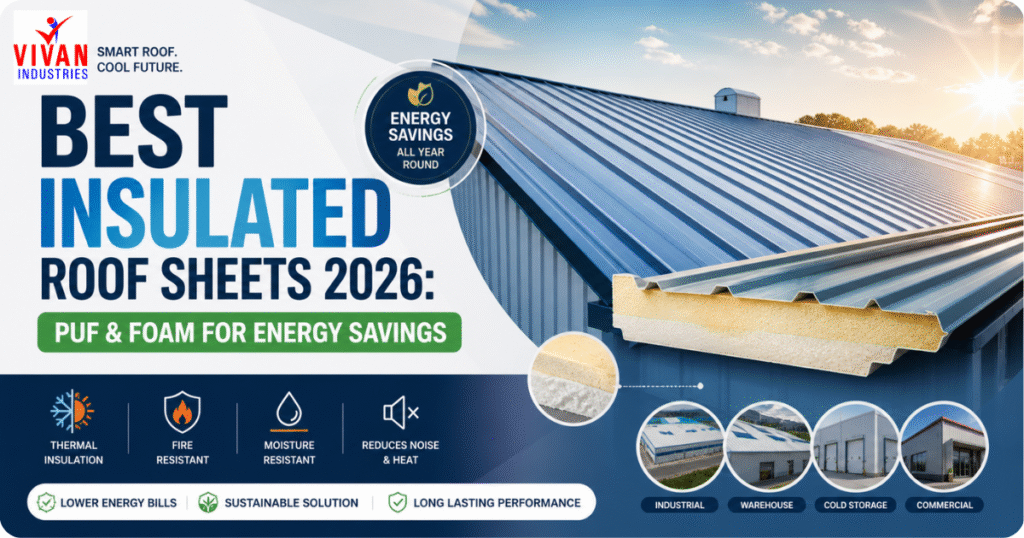
Vivan Industries, a leading PUF Insulation Manufacturer in Vadodara, Gujarat, brings you this guide to insulated roof sheets. As energy costs rise and sustainability demands grow, these solutions are game-changers for industrial builders. Insulated roof sheets, like roof puf sheets and foam roof sheets, offer superior thermal protection. They cut energy use by 30-40% in cold storage and pharma plants. This 2026 update covers the best options for contractors and warehouse developers in India.
With India’s construction market booming at 8.5% CAGR (IMARC 2026), choosing the right insulated roof sheets ensures compliance with green building norms like IGBC. Expect trends like PIR-infused panels for fire safety. Dive in to learn why foam roof sheets dominate Gujarat’s industrial hubs.
What Are Insulated Roof Sheets?
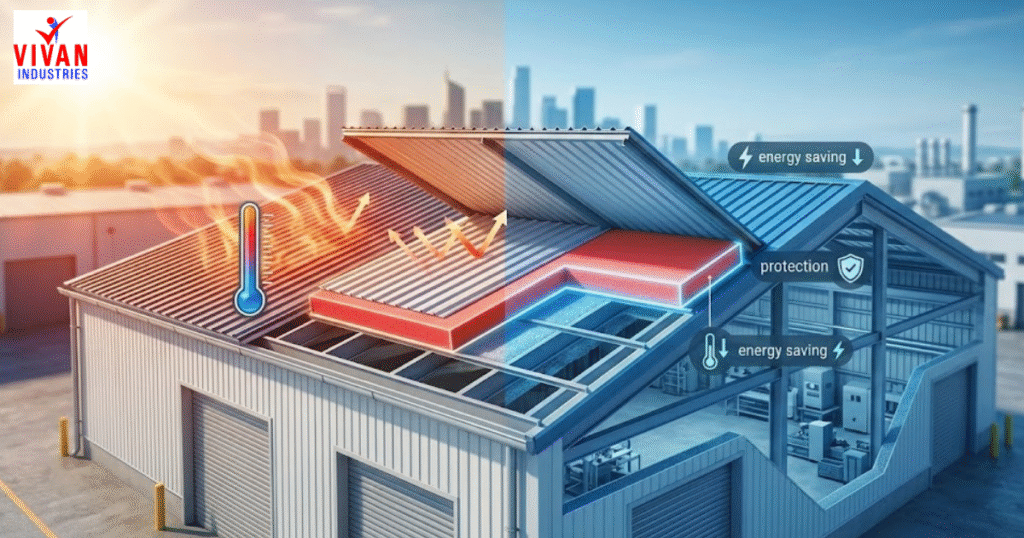
Insulated roof sheets are sandwich panels with a core of polyurethane foam (PUF) or polyisocyanurate (PIR) between metal sheets. They provide insulation, strength, and weather resistance.
Unlike traditional roofing, these foam roof sheets trap air in closed cells, achieving R-values up to 40. This blocks heat transfer effectively.
Key components include:
- Top/bottom galvanized steel (0.5-0.8mm thick).
- Core: PUF (density 40kg/m³) or PIR for higher fire ratings.
- Joints sealed with tongue-groove for airtightness.
In India, they’re ideal for humid climates, preventing condensation in warehouses.
Why Choose Insulated Roof Sheets in 2026?
Energy efficiency drives demand. India’s insulation market hits $1.2B by 2026 (Mordor Intelligence), with PUF panels leading at 12% CAGR.
Roof puf sheets save 35% on AC costs for cold storage operators. They maintain -20°C internals without heavy refrigeration.
Sustainability matters too. These sheets reduce carbon footprints by 25% versus conventional roofs (per Bureau of Energy Efficiency).
For Gujarat builders, quick installation (up to 1,000m²/day) cuts labor by 50%.
| Benefit | Traditional Roof | Insulated Roof Sheets |
| Energy Savings | 10-15% | 30-40% |
| Installation Time | 5-7 days | 2-3 days |
| Lifespan | 15-20 years | 25-30 years |
| Cost per m² (Initial) | ₹800-1,000 | ₹1,200-1,500 |
Types of Insulated Roof Sheets: PUF vs Foam vs PIR
PUF panels use polyurethane foam, offering excellent thermal conductivity (0.022 W/mK). Roof puf sheets excel in cold chain applications.
Foam roof sheets often refer to expanded polystyrene (EPS) or phenolic foams, but PUF dominates for density and durability.
PIR variants add isocyanurate for Class 0 fire rating, crucial for pharma plants.
Comparison table:
| Type | Thermal Conductivity | Fire Rating | Best For | Cost (₹/m²) |
| PUF | 0.022 W/mK | B2 | Cold Storage, Warehouses | 1,200-1,400 |
| PIR | 0.020 W/mK | Class 0 | Pharma, Food Processing | 1,400-1,600 |
| EPS Foam | 0.035 W/mK | B3 | Budget Builds | 900-1,100 |
Choose based on needs—PUF for versatility in Gujarat’s variable weather.
Key Features of Top Insulated Roof Sheets for 2026
2026 models boast enhanced corrosion resistance with AZ150 coating. Thicknesses range 30-100mm for R-values 6-15.
Anti-microbial cores prevent mold in humid pharma warehouses. Cam-lock systems ensure seamless joins.
Weight is low at 10-12kg/m², easing transport for contractors.
Energy savings shine: A 5,000m² warehouse roof with insulated sheets saves ₹5-7 lakhs yearly on power (based on ₹8/kWh).
Applications in Cold Storage and Industrial Builds
Cold storage operators in Gujarat rely on insulated roof sheets for -5°C to -25°C stability. Roof puf sheets minimize defrost cycles, slashing energy by 40%.
Pharma plants use them for cleanrooms, maintaining 22-24°C with zero thermal bridging.
Warehouse developers benefit from quick spanning (up to 12m without purlins), ideal for e-commerce booms.
Industrial builders in Vadodara report 20% faster project timelines.
Real stat: India’s cold chain capacity grows to 200MT by 2026 (NCCD), fueling demand.
Installation Guide for Contractors
Prep the site: Ensure level purlins spaced 1-1.2m. Use Z-purlins for support.
Cut panels to size with a circular saw. Apply silicone sealant on joints.
Fix with self-drilling screws (6-8 per m²). Overlap ends by 150mm.
Pro tip: Install in dry weather; full curing takes 24 hours.
Common pitfalls: Skipping vapor barriers leads to condensation—avoid with proper taping.
Time estimate: Skilled teams cover 500m²/day.
You May Also Read – Top PIR Insulation Manufacturer Gujarat 2026 | Premium Quality
Maintenance and Longevity Tips
Routine checks every 6 months: Inspect seals for cracks, clean debris.
PUF cores resist UV degradation for 25+ years. Recoat steel every 10 years for shine.
In Gujarat’s monsoon, elevate drainage to prevent pooling.
Cost of upkeep: ₹50-100/m² annually, versus ₹300+ for repairs on non-insulated roofs.
Table of lifespan factors:
| Factor | Impact on Longevity | Maintenance Tip |
| Coating Quality | +10 years | Annual wash |
| Installation Accuracy | +5-7 years | Professional teams |
| Environment | -2 years (coastal) | Anti-corrosive grades |
Cost Analysis and ROI for 2026
Initial cost: ₹1,200-1,600/m² installed. Premium for custom colors/thickness.
ROI kicks in fast: Payback in 2-3 years via 35% energy cuts. For a 10,000m² facility, savings hit ₹15 lakhs/year.
Government incentives like MSME subsidies (up to 15%) lower upfronts.
Compare:
| Roof Type | Upfront Cost (₹/m²) | Annual Savings | Payback Period |
| GI Sheets | 600-800 | ₹20,000 | N/A |
| Insulated PUF | 1,300-1,500 | ₹1,00,000+ | 2.5 years |
| PIR Premium | 1,500-1,700 | ₹1,20,000+ | 2 years |
Bulk buys from Gujarat manufacturers drop prices 10-15%.
Future Outlook: Trends in Insulated Roofing
By 2030, smart sensors in roof puf sheets will monitor insulation integrity via IoT. Bio-based foams reduce environmental impact.
India’s green building market surges to $30B (CAGR 15%), pushing insulated roof sheets adoption.
Vivan Industries is at the forefront, innovating for sustainable industrial roofing in Vadodara and beyond.
Conclusion
Insulated roof sheets redefine efficiency for 2026, delivering unmatched energy savings with PUF and foam technologies. From cold storage to pharma plants, roof puf sheets and foam roof sheets handle India’s demanding climates while cutting costs long-term.
Contractors and builders gain durability, quick installs, and ROI under 3 years. With market growth at 12% CAGR, now’s the time to upgrade.
Looking for reliable insulated roof sheets in Vadodara or across India? Vivan Industries offers customized PUF and PIR solutions for cold storage, pharma, and warehouses. Contact us today for a free quote.
FAQ
What are insulated roof sheets made of?
Insulated roof sheets feature a foam core like PUF or PIR sandwiched between galvanized steel sheets. This design ensures thermal insulation and structural strength for industrial use.
How much do insulated roof sheets cost in India 2026?
Expect ₹1,200-1,600 per m² installed. Prices vary by thickness and type—PUF for general use, PIR for fire-prone areas. Bulk orders save 10-15%.
Are roof puf sheets better than traditional roofing?
Yes, roof puf sheets offer 30-40% energy savings, 25-year lifespan, and faster installation. They’re ideal for Gujarat’s hot-humid conditions versus basic GI sheets.
Can foam roof sheets handle heavy snow or wind?
Most handle wind speeds up to 150km/h and snow loads of 150kg/m². Specify higher-gauge steel for extreme weather in northern India.
What is the R-value of PUF insulated roof sheets?
PUF cores deliver R-values of 6-15 (30-100mm thickness), far superior to 2-3 for traditional roofs. This blocks heat gain effectively.
How to install insulated roof sheets on existing structures?
Retrofit over purlins with screws and seals. Ensure 100mm overlap; pros complete 500m²/day. Add vapor barriers for moisture control.
Do insulated roof sheets qualify for green building certifications?
Absolutely—they meet IGBC and GRIHA standards with low U-values. Many earn 10-15 extra points for energy efficiency.
What’s the difference between PUF and PIR roof sheets?
PUF has thermal conductivity of 0.022 W/mK; PIR at 0.020 W/mK with better fire resistance (Class 0). Choose PIR for pharma, PUF for warehouses.