
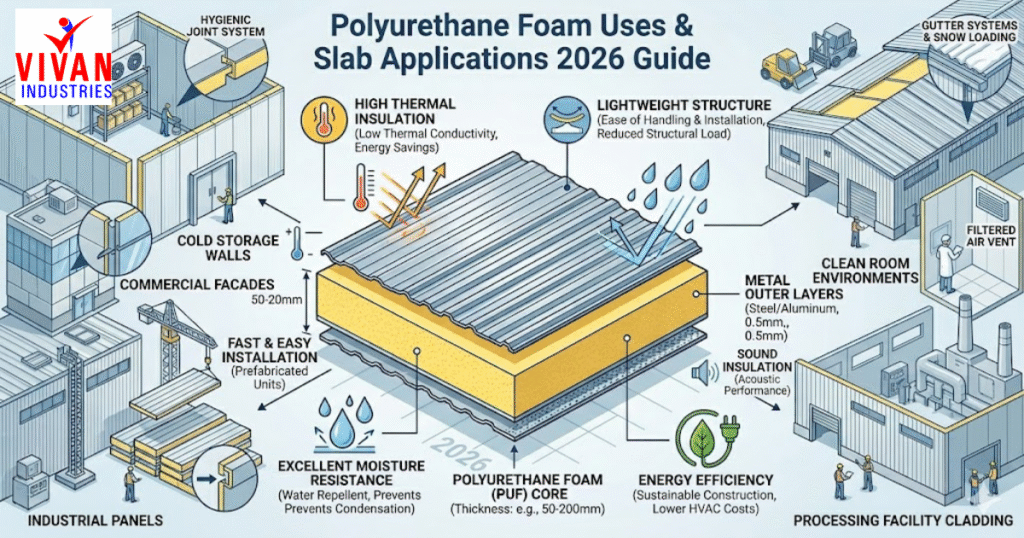
Polyurethane (PU) foam is one of the most versatile engineered materials in modern construction, manufacturing, and packaging, and its applications continue to expand in 2026. From thermal insulation panels and flexible cushioning in furniture to rigid slab‑lifting foams that stabilize concrete and soil, polyurethane‑based systems are appearing in almost every sector where durability, light weight, and energy efficiency are priorities.
This guide explains what polyurethane foam is, its main types, and then dives deep into core uses across industries, followed by a focused look at Polyurethane Foam Slabs and slab‑lift applications. Along the way, you’ll find practical 2026‑oriented tables summarizing key grades, densities, and typical applications so you can quickly map foam types to real‑world projects.
What Is Polyurethane Foam?
Polyurethane foam is a polymer formed by reacting a polyol with an isocyanate, usually in the presence of a catalyst and a blowing agent that creates the foam’s cellular structure. Depending on the formulation, this reaction yields either flexible (softer) or rigid (harder) foams, each with distinct mechanical and thermal properties. Flexible polyurethane foams are typically open‑cell, elastic, and used for comfort and impact absorption, while rigid foams are closed‑cell, dense, and chosen for insulation and structural support.
By 2026 the global polyurethane foam market has grown to roughly USD 64–65 billion, with projections to reach nearly USD 98 billion by 2033, driven mainly by energy‑efficient buildings, lightweight automotive parts, and advanced packaging. A key trend is the shift toward multifunctional foams that combine insulation, sound‑damping, and fire‑retardant behavior, as well as more bio‑based or recyclable formulations to meet stricter environmental regulations.
Main Types of Polyurethane Foam
It’s helpful to distinguish two broad categories before exploring uses:
- Flexible polyurethane foam (FPF):
Used mainly for cushioning in mattresses, furniture, automotive seats, and acoustic panels. - Rigid polyurethane foam (RPF):
Favored for thermal insulation in walls, roofs, cold‑storage facilities, and industrial panels.
Additionally, spray and injection foams have become mainstream in construction and civil‑engineering works, especially for sealing cracks, insulating hard‑to‑reach cavities, and lifting concrete slabs.
Polyurethane Foam Uses in 2026
1. Building and Construction Insulation
Rigid polyurethane foam remains a top‑performing insulation material for buildings because of its high thermal resistance (R‑value) per unit thickness and low thermal conductivity. In 2026 it is widely used in:
- External wall and roof insulation:
Closed‑cell rigid PU boards or spray foam create continuous thermal barriers on façades and roofs, reducing heating and cooling loads. - Cold‑storage and cold‑room linings:
PU‑core panels and foam slabs insulate freezer rooms, cold‑storage warehouses, and food processing facilities, helping maintain stable low temperatures with lower energy consumption. - Insulated doors and windows:
Flexible and rigid PU foams are used in door and window seals, helping control air leakage and improving overall building envelope performance.
Regulatory pressure to improve energy‑efficiency standards (EPBD‑style rules in Europe and similar national codes elsewhere) has pushed builders to adopt higher‑performance foam systems, including spray‑applied polyurethane foam on irregular substrates.
2. Furniture, Bedding, and Automotive
Flexible polyurethane foam is the backbone of modern comfort products. In 2026 its main uses include:
- Mattresses and mattress toppers:
Block‑cut PU foam forms the core of most spring‑free and hybrid mattresses, often combined with memory‑foam or visco‑elastic layers. - Upholstered furniture and seating:
Sofas, chairs, and office seats use molded PU foam for seat cushions, backrests, and armrests, balancing comfort, durability, and cost. - Automotive interiors:
PU foam is standard for car seats, headrests, headliners, dashboard padding, and acoustic insulation, helping reduce noise and vibration while meeting safety and weight‑reduction targets.
Market‑trend data for 2026 highlight that flexible foams for furniture and bedding still account for the largest single application segment of polyurethane foam, followed by rigid insulation in construction.
3. Packaging and Protective Cushioning
Polyurethane foam blocks and custom‑cut shapes are widely used in industrial packaging to protect sensitive goods such as electronics, machinery parts, and medical equipment from shock and vibration during transport. In 2026 the rise of e‑commerce and high‑value logistics has increased demand for:
- Custom‑molded PU inserts in shipping crates.
- Lightweight cushioning for heavy or fragile components.
- Recyclable or low‑VOC foam options to meet sustainability targets.
4. Acoustic and Industrial Applications
Polyurethane foam also plays a key role in reducing noise and vibration:
- Acoustic insulation:
Open‑cell PU foams are used as sound‑absorbing panels in offices, studios, theaters, and industrial plants. - Vibration‑damping and sealing:
Flexible PU foams help dampen vibrations in machinery mounts and fill gaps in industrial equipment, while rigid and spray foams seal joints and ducts to prevent air and water leakage.
Polyurethane Foam Slabs: What They Are and How They’re Used
A polyurethane foam slab is a large block or panel of cured PU foam, typically rectangular, that can be cut, sliced, or machined to suit different applications. These slabs may be flexible or rigid, depending on the formulation, and can be produced in a wide range of densities, hardnesses, and thicknesses.
Key Characteristics of Polyurethane Slabs
- Thermal insulation:
Rigid PU slabs used as insulation can achieve very low thermal conductivity (often around 0.020–0.030 W/m·K), making them highly efficient for walls, roofs, and cold‑storage linings. - Structural potential:
High‑density rigid PU slabs can support load in sandwich‑panel systems, where they sit between metal or other facesheets to provide both insulation and stiffness. - Ease of fabrication:
Slabs can be cut, routed, or CNC‑machined to precise shapes, allowing custom profiles for insulation, gaskets, or protective inserts.
Typical Industrial Applications of Polyurethane Foam Slabs
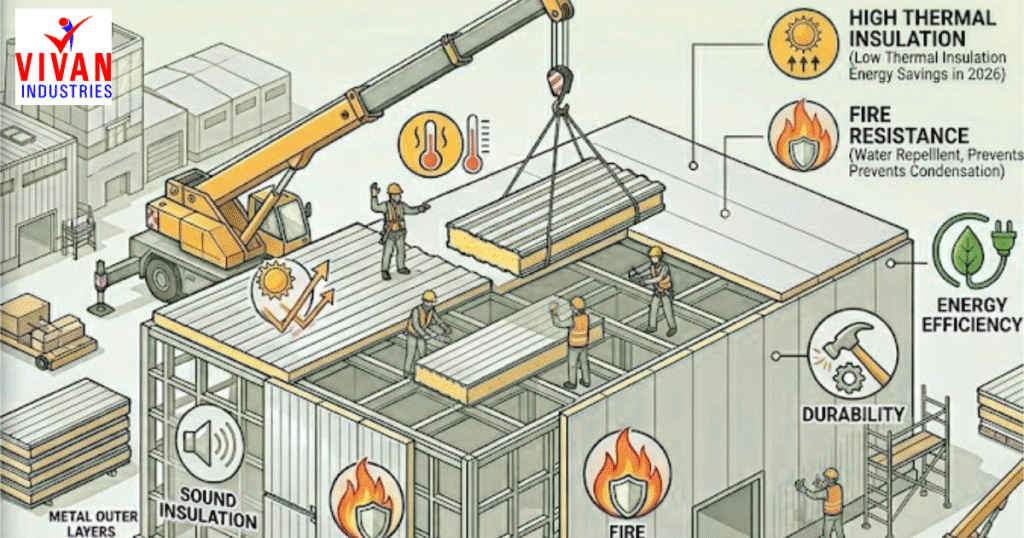
- Cold‑room and cold‑storage insulation:
Pre‑cut PU slabs line walls, ceilings, and floors of cold‑stores and refrigerated warehouses, minimizing heat gain and improving energy efficiency. - Insulated sandwich panels:
Many PU‑core panels used in industrial buildings, clean rooms, and cold‑storage facilities start life as slab stock that is laminated between metal or composite facings. - Custom gaskets and seals:
Flexible PU slabs are sliced into strips or punched into seals for doors, windows, and industrial enclosures.
Polyurethane Foam Slab Lifting and Void‑Fill Applications (2026)
Beyond static insulation, polyurethane foam has become a go‑to material for structural repairs and ground‑stabilization because of its fast‑expanding, lightweight, and water‑resistant properties. In 2026 this is especially important in civil‑engineering, infrastructure, and commercial‑building maintenance.
How Polyurethane Slab Lifting Works
In “slab lifting” or “slab leveling,” a liquid two‑component polyurethane resin is injected through small holes drilled into a sunken concrete slab (e.g., driveway, warehouse floor, parking deck, or runway). Once injected, the components react and expand, filling underlying voids and gently lifting the slab back to its original level.
Key advantages of this method in 2026:
- Non‑invasive and fast:
Only a few small holes are needed, and the foam cures within minutes, allowing traffic to resume much faster than with traditional mud‑jacking or full‑slab replacement. - Lightweight and strong:
Typical injected PU foam weighs only 3.5–5 pounds per cubic foot but can support thousands of pounds per square foot once cured, providing both void‑fill and load‑bearing capacity. - Water‑resistant and durable:
Most modern slab‑lift foams are designed to perform in wet or saturated soils and resist long‑term degradation.
Typical Slab‑Lifting Scenarios
- Sunken driveways, sidewalks, and pool decks.
- Settled warehouse floors and loading‑bay slabs.
- Airport runways and taxiway sections where minor settlement must be corrected without long‑term closure.
In 2026, high‑density polyurethane injection systems are routinely used for both residential repairs and large commercial slabs, with scalable equipment that can handle airport‑scale projects.
Main Polyurethane Foam Types and Uses
| Foam type | Typical density range (kg/m³) | Key properties | Main 2026 applications |
| Flexible PU foam | 20–80 | Soft, elastic, open‑cell, good cushioning | Mattresses, furniture, auto seats, acoustics |
| Rigid PU foam (slab) | 30–200 | Hard, closed‑cell, low thermal conductivity | Wall/roof insulation, cold‑stores, panels |
| Spray PU foam | 30–60 | Applied in‑place, adheres to irregular shapes | Cavity insulation, roofs, façades |
| High‑density slab‑lift PU | 150–300+ | Expanding, water‑resistant, high strength | Slab lifting, void fill, soil stabilization |
Polyurethane Foam Slab Applications by Sector
| Sector | Slab form / format | Primary function |
| Cold‑storage & food | Rigid PU cavity fill or pre‑cut panels | Thermal insulation of walls, floors, ceilings |
| Industrial buildings | PU‑core sandwich panels (slab‑based) | Insulation + structural cladding |
| Construction & sealing | Flexible PU slabs / strips | Door/window seals, gaskets, joint filling |
| Civil‑engineering repair | High‑density injection / slab‑lift | Lifting sunken concrete, void fill, soil stabilization |
Key 2026 Market Trends (Short‑Form)
| Trend / Driver | Impact on PU foam use (2026) |
| Energy‑efficiency regulations | Stronger demand for rigid PU insulation in walls, roofs, and cold‑rooms |
| Lightweight automotive materials | More PU foam in seats, headliners, and noise‑control parts |
| E‑commerce and advanced packaging | Growth in custom‑molded PU protective cushions and inserts |
| Sustainability and bio‑based foams | Increased R&D and early adoption of bio‑based and recyclable PU foams |
Slab‑Lift vs. Traditional Concrete Repair Methods
| Aspect | Polyurethane slab lifting | Traditional mud‑jacking or slab replacement |
| Access required | Small injection holes, minimal disruption | Large excavation or slab removal, more disruption |
| Speed of cure & traffic | Often ready in 15–30 minutes | Longer curing time or full downtime |
| Material weight | Very light (3.5–5 lb/ft³) | Heavy grout or concrete, adds dead load |
| Long‑term durability | Water‑resistant, stable foam in most soils | Grout can crack or erode over time |
| Typical best‑fit | Residential driveways, light commercial, thin slabs | Heavily damaged slabs, large overhauls |
Choosing the Right Polyurethane Foam for Your Project (2026 Tips)
When selecting a polyurethane foam slab or system in 2026, consider the following:
- Application:
- Need thermal insulation? Choose rigid PU foam with low conductivity and appropriate thickness.
- Need cushioning or seating? Go for flexible PU foam with the right ILD (indentation load deflection) and density.
- Need slab lifting or void‑fill? Use high‑density, injection‑grade PU resin designed for structural‑repair work.
- Regulatory and environmental factors:
Check local building codes for fire‑retardant requirements (e.g., B‑class or better for many European‑style buildings) and look for low‑VOC or bio‑based options where sustainability is a priority. - Installation method:
For insulation, decide between pre‑cut slabs / panels and spray‑applied foam based on geometry, access, and labor costs. For slab lifting, ensure the contractor uses certified two‑component polyurethane systems and follows current technical guidelines.
By 2026, polyurethane foam—whether in block‑slab form for insulation and cushioning, or as an injected resin for slab‑lifting and soil stabilization—has become a core material for energy‑efficient, durable, and cost‑effective construction and industrial projects worldwide. Understanding the different types and matching them to specific applications will help you choose the right PU foam solution for your next project.
Conclusion
Polyurethane foam has earned its place as one of the most indispensable engineered materials across construction, manufacturing, infrastructure, and beyond. Vivan Industries Whether you’re insulating a cold-storage facility with rigid polyurethane slabs, cushioning an automotive seat with flexible foam, or lifting a sunken concrete driveway without excavation, the right polyurethane system delivers performance that competing materials rarely match. As 2026 regulations push for greater energy efficiency and sustainability, polyurethane foam formulations continue to evolve — incorporating bio-based ingredients, improved fire retardancy, and lower-VOC blowing agents — while remaining cost-effective and easy to install. Understanding the core differences between flexible and rigid grades, slab-form and spray-applied systems, and standard insulation versus structural slab-lifting foams is the first step toward specifying the solution that best fits your project’s performance, budget, and environmental requirements.