
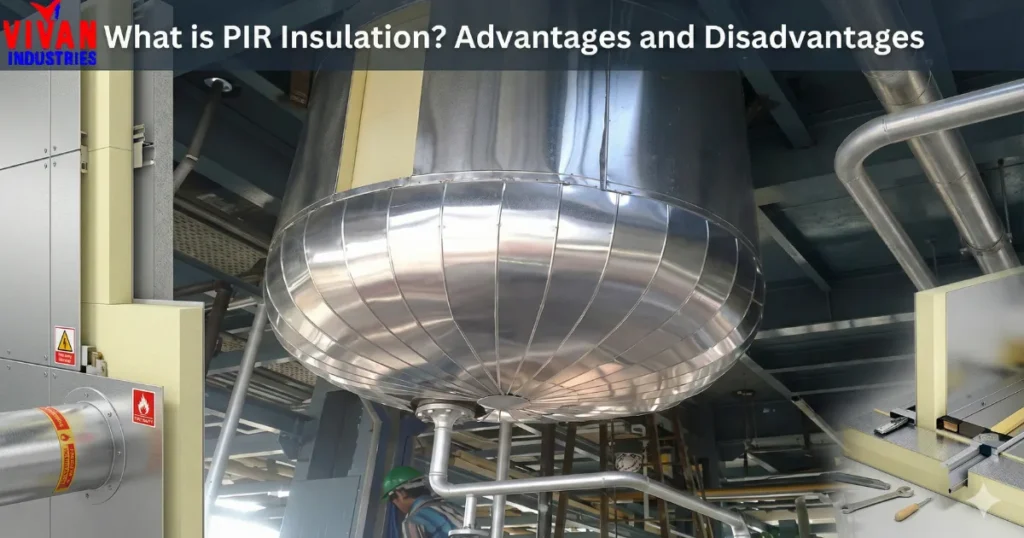
When it comes to modern construction and industrial insulation, one question is being asked more than ever: What is PIR Insulation? Advantages and Disadvantages and is it the right choice for your project? At Vivan Industries, we regularly guide builders, architects, contractors, and industrial buyers who want high-performance insulation that meets 2026 energy standards. With stricter energy codes, rising power costs, and sustainability goals shaping the market, PIR insulation has become one of the most discussed insulation materials in roofing, cold storage, and industrial buildings. This comprehensive pillar guide will answer everything about What is PIR Insulation? Advantages and Disadvantages, using the latest data, practical insights, and real-world applications.
What is PIR Insulation? Advantages and Disadvantages – Overvie
What is PIR Insulation? Advantages and Disadvantages refers to understanding Polyisocyanurate insulation — commonly called PIR — and evaluating its pros and cons for construction and industrial use.
PIR (Polyisocyanurate) is a rigid foam insulation board widely used in:
- Commercial buildings
- Cold storage facilities
- Industrial sheds
- Roof and wall panels
- Clean rooms
It is known for its:
- High thermal resistance (R-value)
- Fire-resistant properties
- Lightweight structure
- Moisture resistance
In 2026, energy efficiency regulations across many countries demand lower U-values in buildings. PIR insulation helps meet these targets with thinner boards compared to traditional materials like mineral wool or expanded polystyrene. Understanding What is PIR Insulation? Advantages and Disadvantages helps you make better decisions — especially when insulation affects energy bills, structural safety, and compliance. At Vivan Industries, PIR panels are engineered for performance, durability, and industrial reliability.
What is PIR Insulation Made Of?
To understand What is PIR Insulation? Advantages and Disadvantages, you must first know its composition.
PIR insulation is made from:
- Polyol
- Methylene diphenyl diisocyanate (MDI)
- Blowing agents
- Flame retardants
The chemical reaction creates a closed-cell rigid foam structure. These closed cells trap gas inside, reducing heat transfer.
Structure of PIR Insulation
| Component | Function |
| Polyol | Forms polymer structure |
| Isocyanate | Reacts to create foam |
| Blowing Agent | Creates insulation cells |
| Facing (Aluminum/Kraft) | Improves durability |
The aluminum foil facing enhances vapor resistance and structural strength.
This chemical composition is one reason behind the major Advantages of PIR Insulation especially in thermal and fire performance.
How PIR Insulation Works
Now let’s break down heat transfer.
Heat moves in three ways:
- Conduction
- Convection
- Radiation
PIR insulation works by:
- Trapping gas inside closed cells
- Reducing heat conduction
- Reflecting radiant heat (foil facing)
Thermal Performance Comparison
| Insulation Type | Approx. R-Value per Inch |
| PIR | 6.0 – 6.5 |
| PUF | 5.5 – 6.0 |
| Mineral Wool | 3.0 – 4.0 |
| EPS | 3.6 – 4.2 |
This high R-value explains why What is PIR Insulation? Advantages and Disadvantages is such an important topic in energy-efficient construction.
Types of PIR Insulation Boards
Different projects require different solutions.
Common Types:
- Roof PIR Boards
- Wall Sandwich Panels
- Cold Storage Panels
- Floor Insulation Boards
- Duct Insulation Panels
For industrial comparison, you may explore Difference Between PUF and PIR Panels to understand structural and performance distinctions. At Vivan Industries, customized PIR sandwich panels are designed for industrial use, ensuring structural integrity and thermal efficiency.
Advantages of PIR Insulation
Understanding the Advantages of PIR Insulation is essential when evaluating What is PIR Insulation? Advantages and Disadvantages.
Key Benefits:
- High thermal efficiency
- Excellent fire resistance
- Lightweight
- Moisture resistant
- Space-saving (thin profile)
- Long lifespan
Why It Matters
- Energy Savings – Lower heating and cooling costs.
- Fire Safety – Better fire performance than PUF.
- Durability – Maintains R-value over time.
According to 2026 building energy reports, high-performance insulation like PIR can reduce building energy consumption by up to 30%. These strong Advantages of PIR Insulation make it a preferred choice in industrial sectors.
Disadvantages of PIR Insulation
No material is perfect. To fully understand What is PIR Insulation? Advantages and Disadvantages, we must address limitations.
Key Disadvantages:
- Higher initial cost
- Requires professional installation
- Sensitive to UV exposure
- Slight brittleness
While the Disadvantages of PIR Insulation exist, most can be managed with proper installation and protective facings. Cost is often the main concern. However, lifecycle savings usually offset the upfront investment.
PIR vs Other Insulation Materials
Let’s compare clearly.
| Feature | PIR | PUF | Mineral Wool |
| Fire Resistance | High | Moderate | High |
| Thermal Efficiency | Excellent | Very Good | Moderate |
| Moisture Resistance | High | High | Moderate |
| Cost | Higher | Moderate | Moderate |
For detailed industrial insights, you can also review What Is PUF Insulation and How It Is Used in Pipes for comparison in pipe systems.
Applications of PIR Insulation
Where is PIR used?
- Cold storage warehouses
- Pharmaceutical plants
- Food processing units
- Commercial roofing
- Industrial clean rooms
In heavy industries, alternatives like Puf Insulation For Industrial Use are also used depending on fire and cost considerations. At Vivan Industries, PIR panels are widely used in temperature-controlled facilities due to superior thermal performance.
Fire Performance and Safety
One major reason people search What is PIR Insulation? Advantages and Disadvantages is fire safety. PIR forms a char layer when exposed to flame. This slows fire spread.
Compared to PUF, PIR has:
- Lower smoke emission
- Higher ignition resistance
- Better compliance with fire standards
This explains the growing demand in 2026 construction projects.
Installation Best Practices
To maximize Advantages of PIR Insulation, follow these:
- Ensure vapor barrier sealing
- Avoid thermal bridging
- Use proper fasteners
- Protect from UV exposure
Improper installation increases the Disadvantages of PIR Insulation, especially moisture leakage. Professional installation is strongly recommended.
Environmental Impact and Sustainability
Sustainability matters more than ever.
PIR insulation:
- Reduces building energy consumption
- Supports green building certifications
- Has long lifespan
Many manufacturers now use low-GWP blowing agents to reduce carbon footprint. Understanding What is PIR Insulation? Advantages and Disadvantages also includes evaluating environmental impact.
Latest Trends in PIR Insulation
Recent trends include:
- Thinner high-density PIR boards
- Improved fire ratings
- Hybrid PIR systems
- Smart panel integration
According to industry projections, the global rigid insulation market is expected to grow steadily due to energy regulations. Builders are increasingly researching What is PIR Insulation? Advantages and Disadvantages before selecting materials.
Conclusion
So, What is PIR Insulation? Advantages and Disadvantages? PIR insulation is a high-performance, fire-resistant, energy-efficient rigid foam insulation used in industrial and commercial construction.
Advantages of PIR Insulation
- High R-value
- Fire resistant
- Moisture resistant
- Long lifespan
Disadvantages of PIR Insulation
- Higher upfront cost
- Requires proper installation
If energy savings, fire performance, and durability matter to your project, PIR insulation is a smart investment. At Vivan Industries, we specialize in delivering high-quality PIR insulation panels tailored for industrial and commercial use. Our experts help you choose the right insulation system for maximum efficiency and safety. Contact Vivan Industries today to upgrade your insulation system with advanced PIR solutions.
FAQs
1. What is PIR insulation used for?
PIR insulation is used in roofs, walls, cold storage, and industrial buildings for thermal efficiency.
2. Is PIR better than PUF?
PIR offers better fire resistance and slightly higher thermal performance.
3. What are the disadvantages of PIR insulation?
Higher cost and installation sensitivity are the main disadvantages.
4. Is PIR insulation waterproof?
It has high moisture resistance but still requires sealing.
5. How long does PIR insulation last?
It can last 25–40 years when properly installed.