
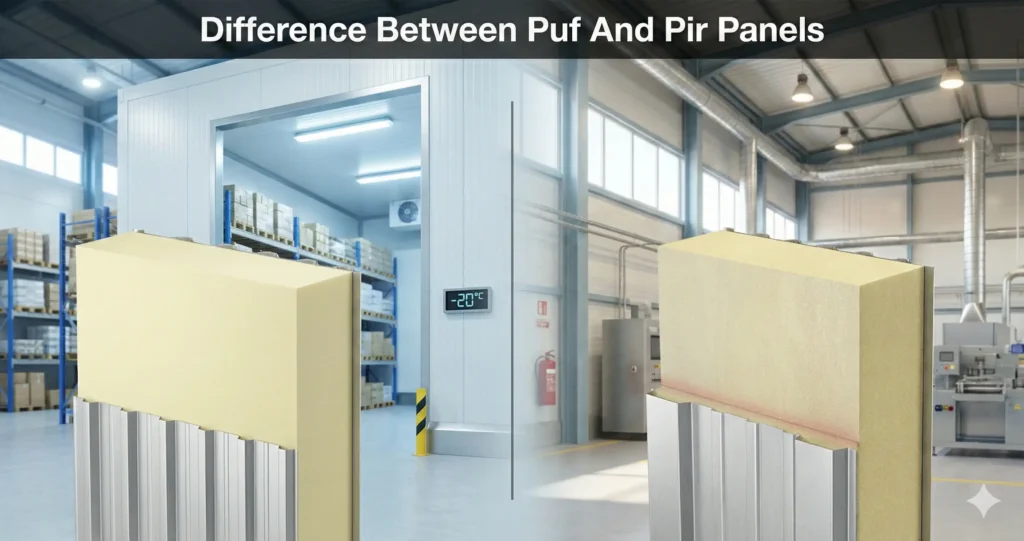
When selecting insulation panels for industrial buildings, warehouses, pharmaceutical plants, or cold storage units, one question often comes up: what is Difference Between Puf And Pir Panels? At Vivan Industries, we regularly guide project consultants, architects, and contractors who want clarity before investing in insulation systems. While PUF (Polyurethane Foam) and PIR (Polyisocyanurate) panels may look similar from the outside, their performance, fire resistance, durability, and long-term value are quite different. This in-depth guide explains the Difference Between Puf And Pir Panels clearly.
What Are PUF Panels?
PUF panels are sandwich panels that use Polyurethane Foam (PUF) as the insulation core between two metal sheets. These panels are widely used in industrial roofing, wall cladding, and temperature-controlled environments.
PUF panels are known for:
- Good thermal insulation
- Lightweight structure
- Cost-effectiveness
- Easy installation
Industries that require Puf Insulation For Industrial Use often choose PUF panels because they provide reliable insulation at a lower initial investment.
However, when discussing the Difference Between Puf And Pir Panels, fire behavior becomes a major factor. Standard PUF panels can ignite under high temperatures and may produce smoke. While modified PUF versions improve safety, they still differ from PIR panels in fire classification. At Vivan Industries, PUF panels are recommended for projects where budget constraints are significant and fire safety requirements are moderate.
What Are PIR Panels?
PIR panels are insulated sandwich panels that use Polyisocyanurate foam as the core material. PIR is an enhanced version of polyurethane with improved fire resistance and thermal stability. Although both panels appear similar, their internal chemistry is different. PIR has a stronger cross-linked structure, making it more resistant to high temperatures. When evaluating the Difference Between Puf And Pir Panels, PIR panels typically outperform PUF in:
- Fire resistance
- Smoke suppression
- Structural stability at high temperatures
- Compliance with 2026 building codes
Industries such as pharmaceuticals, clean rooms, and food processing units often prefer PIR panels for enhanced safety compliance.
Manufacturing Process and Chemical Composition
Understanding the chemical difference helps clarify the Difference Between Puf And Pir Panels.
| Feature | PUF Panel | PIR Panel |
|---|---|---|
| Base Material | Polyurethane | Polyisocyanurate |
| Cross-Link Density | Moderate | High |
| Fire Retardancy | Limited | Enhanced |
| Thermal Stability | Good | Excellent |
PIR uses a higher MDI ratio during manufacturing, creating a more heat-resistant structure. This makes PIR panels char instead of melt when exposed to fire.
In simple terms:
- PUF may melt under extreme heat.
- PIR forms a protective carbon layer and slows flame spread.
This is one of the biggest pur/pir sandwich panels differences seen in industrial testing.
Difference Between Puf And Pir Panels: Core Comparison
Let’s directly address the core question: what is Difference Between Puf And Pir Panels?
Here’s a simplified breakdown:
- PIR panels have superior fire resistance.
- PUF panels are more economical.
- PIR provides better long-term durability.
- PUF works well in controlled environments.
The discussion is often referred to as Pur Vs Pir Sandwich Panel comparison in construction specifications. With stricter 2026 fire safety regulations, the Difference Between Puf And Pir Panels is becoming more important for compliance approvals.
Fire Resistance Comparison
Fire safety is the primary difference.
| Property | PUF Panel | PIR Panel |
|---|---|---|
| Fire Rating | B2/B3 | B1 or better |
| Smoke Emission | Moderate | Low |
| Flame Spread | Faster | Slower |
| Self-Extinguishing | Limited | Yes |
PIR panels resist fire spread better because of their molecular structure. PUF panels, while safe under normal conditions, may not meet high-risk fire standards. For industries dealing with chemicals, electronics, or pharmaceuticals, the Difference Between Puf And Pir Panels in fire performance becomes critical.
Thermal Performance Analysis
Both PUF and PIR panels provide strong thermal insulation.
- PUF conductivity: ~0.022–0.028 W/mK
- PIR conductivity: ~0.021–0.026 W/mK
PIR performs slightly better at higher temperatures, maintaining structural integrity longer. Businesses focusing on Puf Insulation For Industrial Use often prioritize energy savings, but they must also consider fire classification when evaluating the Difference Between Puf And Pir Panels.
Better insulation means:
- Reduced cooling costs
- Lower electricity bills
- Improved temperature consistency
Structural Strength and Longevity
Durability is essential in industrial environments.
PIR panels offer:
- Better dimensional stability
- Higher compressive strength
- Resistance to deformation
PUF panels are reliable but may soften under prolonged high heat.
These pur/pir sandwich panels differences are important in roofing projects with large spans. At Vivan Industries, PIR panels are often recommended for long-term structural performance.
Cost vs Long-Term Value
| Parameter | PUF | PIR |
|---|---|---|
| Initial Cost | Lower | Slightly Higher |
| Maintenance | Moderate | Low |
| Fire Insurance Premium | Higher | Lower |
| Lifespan | 15–20 Years | 20–25 Years |
While PUF panels are cheaper initially, PIR panels often reduce insurance costs and long-term risk. When comparing the Difference Between Puf And Pir Panels, long-term ROI is a major deciding factor.
Sustainability and Environmental Trends
In 2026, green building certifications emphasize:
- Energy efficiency
- Low smoke emission materials
- Long lifecycle durability
PIR panels align better with these standards.
Applications of PUF and PIR Panels
Ideal Applications for PUF Panels:
- Portable cabins
- Budget warehouses
- Temporary industrial sheds
Ideal Applications for PIR Panels:
- Pharmaceutical units
- Data centers
- Cold storage facilities
- Clean rooms
Industries researching What Is PUF Insulation and How It Is Used in Pipes often combine PUF pipe insulation with PIR sandwich panels for complete insulation systems.
Pur Vs Pir Sandwich Panel – Technical Comparison
| Feature | PUF Panel | PIR Panel |
|---|---|---|
| Fire Resistance | Moderate | High |
| Thermal Efficiency | Good | Excellent |
| Smoke Emission | Higher | Lower |
| Structural Stability | Good | Very Good |
| Lifespan | 15–20 Years | 20–25 Years |
This table clearly shows the Difference Between Puf And Pir Panels in measurable parameters.
Installation and Maintenance
Both panels are easy to install using standard fastening systems.
However:
- PIR panels require stricter handling for fire rating compliance.
- PUF panels are slightly more flexible during installation.
For projects requiring integrated Thermal Insulation Solutions, panel compatibility with other insulation materials must be evaluated carefully.
Regular maintenance includes:
- Inspecting joints
- Preventing moisture entry
- Cleaning metal surfaces
How to Choose the Right Panel
- What are my fire safety requirements?
- What is my budget?
- What is the expected building lifespan?
Choose PUF if:
- Budget is limited
- Fire risk is moderate
Choose PIR if:
- Fire safety is critical
- Compliance standards are strict
- Long-term value matters
At Vivan Industries, experts evaluate site requirements before recommending the best solution.
Why Vivan Industries Recommends PIR for Modern Projects
With updated 2026 building codes, PIR panels are becoming the preferred solution for high-performance construction.
At Vivan Industries, we provide:
- Certified PUF and PIR panels
- Custom insulation solutions
- Technical guidance
- Long-term project support
The Difference Between Puf And Pir Panels directly impacts safety, insurance, and operational costs. Making the right decision today ensures long-term reliability.
Conclusion
So, what is the final Difference Between Puf And Pir Panels? PUF panels are economical and effective for standard applications.
PIR panels offer higher fire resistance, better durability, and improved long-term value. As fire norms tighten and energy efficiency becomes mandatory, PIR panels are increasingly becoming the preferred choice. For expert consultation and high-quality insulation panels, connect with Vivan Industries today. Choose smarter insulation. Build safer structures.
FAQs
1. What is the biggest Difference Between Puf And Pir Panels?
The biggest difference is fire resistance. PIR panels are safer and produce less smoke.
2. Are PIR panels worth the higher cost?
Yes. They provide better long-term value and compliance benefits.
3. Which panel is better for cold storage?
Both work well, but PIR is preferred for high fire-safety environments.
4. Is there a difference in thermal insulation?
Thermal performance is similar, but PIR performs better at high temperatures.
5. Which panel should I choose for industrial roofing?
For high-risk environments, choose PIR. For budget projects, PUF is suitable.